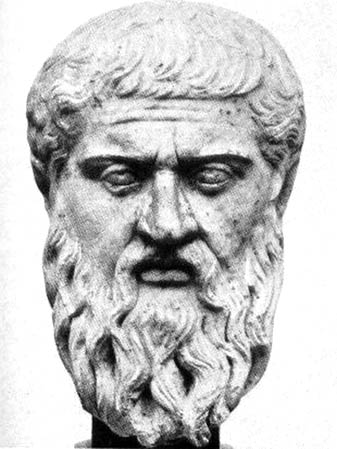
This is not the "All Plato All The Time" class, I promise, but we can't move on from Plato until we explore the Allegory of the Cave.
Imagine living your entire life in an underground cave your feet and hands are bound to the floor you are sitting on. You have been here since childhood and you are facing a wall, behind you is the cave opening your back is to it.
Above and behind you a fire is blazing on a raised walk way. The way the fire is set makes it so you see shadows of the people passing by, animals, wood piles, some of them talk, some of them silent, some of them making noises that you do not understand. To you the truth would be literally nothing but the shadows of the images, a shadow of a duck would be a real duck to you
One of the prisoners escapes, the prisoner is not supposed to leave or be let go of. The escaped prisoner finds the way out hard and uncomfortable. Her feet are bloodied and she barely survives the journey.
She finally reaches the outside world and for the first time she sees a duck it is not longer just a flat shadow it is a real duck with dimension.
She looks straight into the sun but it hurts her eyes, but she keeps looking anyway because after living in darkness for so long feeling that sun on her face is the best feeling she has ever felt.
All of a sudden the escapee starts to think about all the people still living in the dark, disgusting cave. She can't wait to tell them all about life outside the cave. As she goes back into the cave her eyes are so sore as the sun really strained them, but she finds the trip back into the cave easy aside from her eyes. She tell all the prisoners that she was chained with what it is like outside of the cave. The prisoners want to hear nothing of her tales, they tell her to shut up, they tell her to stop telling tales, they trap her and pull her back to her place and stone her until she is silent.
Right after telling the story I handed out paper and asked you each to draw your interpretation of the cave. This was not a time to discuss the meaning behind the story, only to process silently your thoughts and feelings about the allegory.
After spending some time drawing I opened the floor to discussion with the understanding that each question I asked I wanted to know the hidden meaning to the allegory: (I am listing some of the class answers in red)
1. Who is in the cave? Limited understanding, only knowing parts of the truth
2. What is in the cave? people who let society dictate they thoughts
3. Where are these people in the cave?people living a life without thinking
4. What is going on in the cave? Prejudice - pinning all people into one group, some religion, living without education and wonder, thinking you know everything
5. Can this cave be applied to the modern day setting? Yes, people still live like this all the time, some religious fanatics, politicians
6. What does the sun represent? Real truth, the desire to know more
7. What does the returned prisoner's desire to lead the out the represent? The desire to share what she has learned with others
8. Why is the path out of the cave so hard, and the return so easy? Gaining knowledge is a lot of work, slipping back is easy, it is easy to be lazy
9. Why do you think the other prisoners killed the one who returned? Opposing thought is hard to take, Plato wanted the reader to see how crazy it is to live without thinking
Quote of the Week:
The unexamined life is not worth living
-Socrates
Extra links and Food For Thought
Allegory of Plato's Cave Text - this is worth the read!
Homework for week #3 - none
Topic Hint - Aristotle and Friends